Spotlights viral anomalies where low-follower accounts achieve outsized organic reach
A closer look at the top alternatives
1
Semantica AI instead of Geoaist
AI marketing and SEO toolsData and analytics
Good specialized serviceTrial
Digital marketers, SEO/GEO teams, and brand managers can use Semantica AI to see exactly how generative search engines perceive their products, catch factual AI errors, and identify the external media sources feeding AI answers to steer target outreach.
Pros
Broad monitoring across OpenAI, Anthropic Claude, Perplexity, Google Gemini, DeepSeek, and Alice AI
Precise citation tracking that identifies the exact web sources powering model responses
Cons
High barrier to entry with paid tiers starting at $490 per month following the 7-day trial
Designed for marketers, agency specialists, e-commerce sellers, and business owners seeking an end-to-end command center for ad deployment and creative production. It provides direct access to top-tier generative engines without foreign payment barriers, automating repetitive tasks like campaign auditing, graphics generation, and lead processing.
Pros
Consolidated access to top-tier models from OpenAI, Anthropic Claude, Google Gemini, Suno, and ElevenLabs under a unified pay-as-you-go balance
Deep native integration with Yandex Direct for automated keyword clustering, ad generation, and ongoing campaign optimization
Cons
Direct programmatic ad management and automated bidding via API are restricted to custom partner agreements
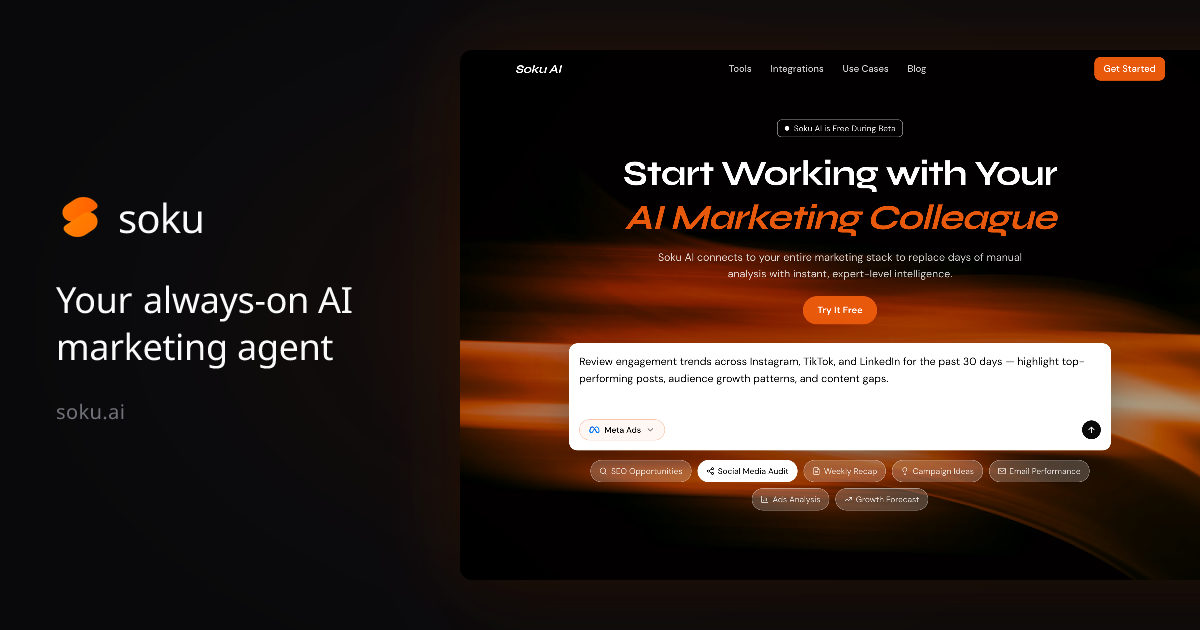
Soku gives digital agencies and in-house growth teams an always-on performance analyst and executor:
Eliminates manual firefighting: Automatically flags and pauses fatigued creatives or reallocates daily spend from underperforming ad sets to top-performing audiences.
Multi-channel alignment: Evaluates blended ROAS, CAC, and conversion metrics across Meta, Google, TikTok, and GA4 in one consolidated decision log.
Graduated autonomy: Lets media buyers maintain control with one-click approvals before granting the agent autonomous write access to live ad accounts.
Pros
Closes the loop from performance analytics to live execution (pausing ads, shifting budgets, staging launches)
Graduated four-tier autonomy controls from read-only auditing to one-tap approval and full autopilot
Cons
Native video generation tools are restricted to short clips (4 to 15 seconds at 480p or 720p resolution)
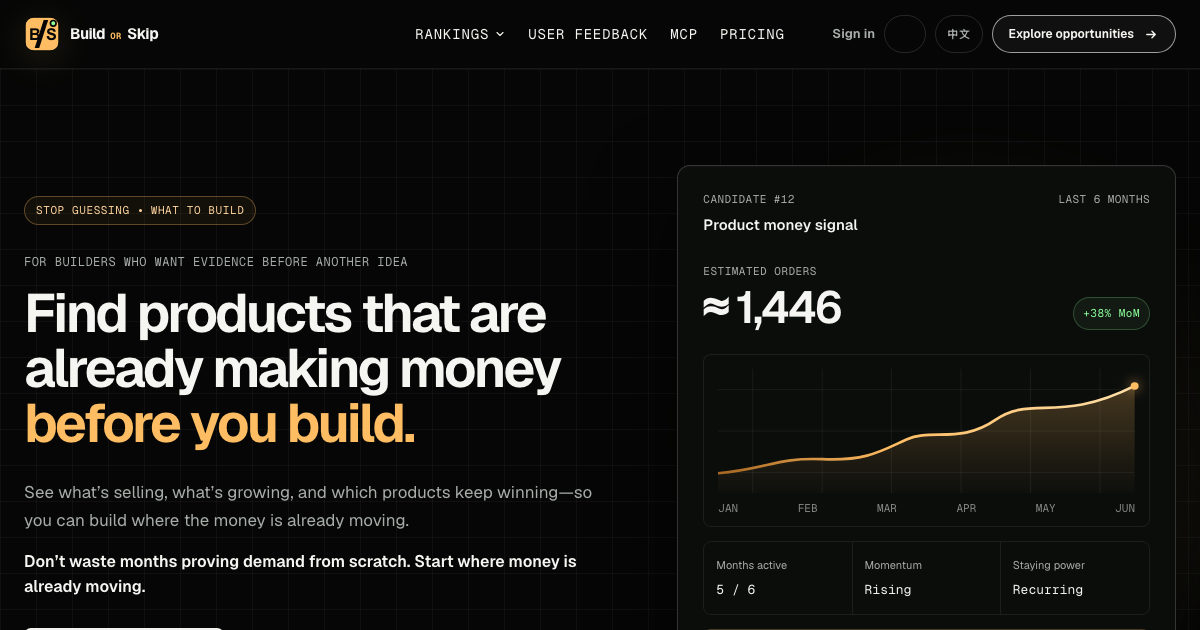
Build or Skip helps indie developers, solo founders, and product teams eliminate guesswork during project discovery by building strictly where money is already moving:
Demand Validation: Confirm that buyers are actively paying for similar solutions before spending engineering hours on an MVP.
Early Competitor Reconnaissance: Detect brand-new domains generating immediate transactions right after registration.
AI Agent Integration: Query live market datasets and competitor snapshots directly from Cursor or Claude Desktop via MCP.
Distribution Intelligence: Discover active submission directories and backlink opportunities with pre-checked pricing and reciprocal requirements.
Pros
Focuses on observed payment signals and checkout activity rather than vanity social metrics
Native MCP server support enables direct competitor research inside Cursor and Claude Desktop
Cons
Payment signals are heuristic estimates based on checkouts and traffic rather than audited bank balances
Trendsee serves SMM specialists, reels producers, content agencies, and business owners looking to establish a predictable short-form video pipeline. It eliminates 8–10 hours of manual research each month by delivering data-validated video concepts, structured shooting scripts, and automated comment-to-DM conversion funnels.
Pros
Spotlights viral anomalies where low-follower accounts achieve outsized organic reach
Detailed deconstruction of video mechanics, including visual hooks, timing, and audio transcription
Cons
Focuses strictly on pre-production with no video rendering, trimming, or automated editing