
 Paid
Paid
Replit
Quick facts
- Pricing model
- Paid
- Minimum price
- from $20/month
- Free access
- No
- Regional payment options
- Pay directly on the website
- Service status
- Online, checked
- User rating
Developer and reliability
Information about the developer and the service's terms. This is a factual reference, not a quality assessment or a guarantee of safety.
- Legal entity
- Replit, Inc.
- Legal entity's country
- United States
- Domain registered
- September 2, 2011
- The domain registration date is not the service's launch date.
Compare with alternatives
Choose a pair to compare features, pricing and assessments.
Editorial assessment
Strong technology platformReplit has long outgrown its origins as a lightweight in-browser coding sandbox, maturing into a full-fledged development orchestration platform. Its decisive advantage is the closed execution loop: the agent does not merely dump code into a chat window—it sets up the file tree, provisions the database, launches a virtual browser to check whether UI buttons actually work, and deploys the build to a public URL.
There are no miracles here, of course: once an application expands into hundreds of custom modules, the probabilistic nature of neural networks shows its limits. The agent can lose track of earlier architectural decisions or spend credits trying to patch dependency conflicts with endless hotfixes. However, for zero-to-one prototyping, building internal business tools, and rapid hypothesis validation, the pairing of parallel agents and instant cloud infrastructure makes Replit one of the most capable engineering environments available.
- Functionality High
- Price and value Good
- Ease of use Good
- Reliability and support Average
- Innovation High
About the tool
Replit is a cloud-based development ecosystem and autonomous software creation platform driven by AI. Instead of forcing you to copy and paste generated snippets from an isolated chat window into a separate editor, Replit provides a unified end-to-end workspace where natural language prompts turn directly into live web applications, backends, databases, and microservices.
The system handles the full software lifecycle within containerized Linux environments:
- Autonomous Replit Agent: Breaks down project specifications, generates multi-file architectures, installs necessary libraries, and writes backend and frontend logic simultaneously.
- Intelligent Model Routing: Dynamically distributes prompts across various model families—including Anthropic Claude, OpenAI, Google Gemini, and DeepSeek—matching lightweight style tweaks to cost-effective models and complex reasoning to heavy frontier engines.
- Browser-Based Reflection Loop: Periodically tests the generated web app through an automated browser emulator, reading logs and fixing interface breakages without requiring manual troubleshooting.
- Zero-Setup Full-Stack Infrastructure: Comes out of the box with a built-in PostgreSQL database, user authentication (Replit Auth), and instant deployment with automated SSL certificates and custom domains.
- Infinite Canvas & Multi-User Collaboration: Allows teams to visually tweak UI elements, run parallel development branches, and review agent tasks through an integrated Kanban-style interface.
How it helps you
Replit bypasses the traditional friction of local machine configuration, dependency management, and cloud devops.
- Founders and Product Managers can turn rough concepts into functional, database-backed MVPs, interactive dashboards, or internal tools in hours without waiting on engineering resources.
- Software Engineers can rapidly delegate boilerplate development, run parallel feature experiments across isolated branches, and ship customer prototypes instantly.
Pros and cons
Pros
- Complete full-stack infrastructure with built-in PostgreSQL, authentication, and one-click hosting
- Automated browser emulation loop that tests and repairs UI interactions autonomously
- Parallel task execution across isolated branches with clean merge visibility
- Intelligent model routing optimizing cost and capability across top model providers
- Cross-platform access via desktop web IDE and native mobile clients on iOS and Android
Cons
- Large, complex codebases can trigger agent context drift and repetitive patching loops
- Container compute and memory limits restrict resource-heavy workloads and intensive data processing
- Autonomous agent sessions are capped at a continuous runtime limit of 200 minutes per task
- Background processes and standalone bots require always-on configuration to avoid sleeping when idle
User reviews
No reviews collected yet
We are collecting user reviews of this tool from public sources. They will appear here soon.
Pricing
Prices are based on the provider's information and may change.
Looking for a free option? Try these alternatives to Replit:


Compare with popular alternatives
Compare key features, prices and capabilities with similar tools
| Feature | Current tool |  |  |  |
|---|---|---|---|---|
| Pricing model | Paid | Pay as you go | Trial | Trial |
| Minimum price | from $20/month | Pay as you go | from $10/month | from $40/month |
| Free access | No | No | Trial access | Trial access |
| Regional payment options | Direct payment | Direct payment | Direct payment | Direct payment |
| Editorial assessment | Strong technology platform | Good specialized service | Strong technology platform | Good specialized service |
| User rating | ||||
| Current tool |




















Frequently asked questions
Can Replit build full applications without manual coding?
Yes. Replit Agent interprets natural-language specifications to create all necessary files, configure environments, set up dependencies, connect database storage, and deploy a functioning application. You can steer features, make UI updates, and troubleshoot behavior entirely through conversational prompts.
How does the self-testing reflection loop work?
While building a web project, Replit Agent periodically opens the app in a headless browser, performs automated interaction tests, and inspects runtime logs. If it detects unhandled exceptions or broken visual layouts, it autonomously refactors the source code to resolve the errors before completing the task.
Which AI models power Replit?
Replit uses an Intelligent Model Routing system that connects to models from leading AI labs, including OpenAI, Anthropic Claude, Google Gemini, and DeepSeek. The platform automatically assigns subtasks to the most suitable model based on architectural complexity, reasoning requirements, and cost efficiency.
What are the infrastructure limits of Replit applications?
Repls run inside virtualized containers with fixed vCPU and memory allocations, making them unsuitable for heavy on-box machine learning training or massive data processing. Additionally, continuous autonomous agent sessions max out at 200 minutes per task, and persistent background processes require always-on hosting configurations to stay awake without web traffic.
Similar tools
 OpenCode ▲ 4 ▼ 0
OpenCode is an open-source autonomous coding agent that flips the script on proprietary AI assistants by running directly in your terminal, desktop app, or code editor without locking you into a single corporate ecosystem.

 MiniMax ▲ 2 ▼ 0
MiniMax is a full-stack multimodal artificial intelligence ecosystem built on proprietary foundation models.
 Google Antigravity ▲ 2 ▼ 0
Google Antigravity is an agentic software development platform designed to shift everyday engineering from inline autocompletion to delegating complete tasks to autonomous AI agents.
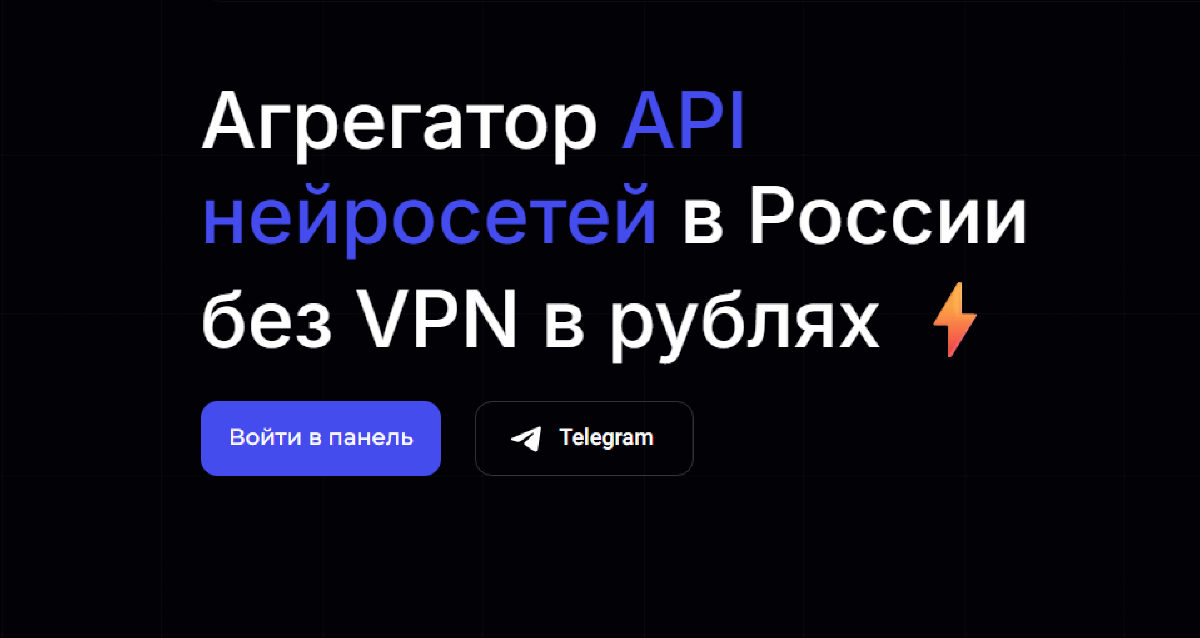 AITUNNEL ▲ 4 ▼ 0
AITUNNEL is an infrastructure gateway that provides unified access to over two hundred AI models through a single API endpoint.

 Поехали ▲ 2 ▼ 0
Поехали is a full-stack AI platform designed to transform natural language descriptions or visual UI mockups into deployed web applications.

 Flowstep: Your AI Design Assistant ▲ 1 ▼ 0
Flowstep cuts through the typical AI design nonsense: instead of spitting out flat, uneditable mockups that force you to redraw everything from scratch, it generates fully layered vector UI components on an infinite canvas.