 provod.ai VS
  Requesty
In short
- Only Requesty offers free access.
Categories LLM aggregators and APIs Automation, LLM aggregators and APIs
Pricing and payment
Pricing model Pay as you go Trial
Starting price Pay as you go Free
Free access No Yes
Pricing plans - Тарификация по использованию — Pay as you go
- FREE — Free
- PAY AS YOU GO — Pay as you go
- ENTERPRISE — Contact for pricing
Regional payment options Pay directly on the website Pay directly on the website
Pricing last changed —
Ratings and reviews
Editorial assessment Good product Good product
Functionality Good Good
Price and value Good Good
Ease of use Good Good
Reliability and support Average Average
Innovation Average Good
User rating +5 +2
Data freshness
Service status Online, checked Online, checked
Last full review of the listing
Checked
Values come from catalog data: collected pricing, editorial assessments, reviews and the verification history. How we assess tools
 provod.ai
 Pros
- Native support for both OpenAI Chat Completions and Anthropic Messages endpoints without protocol wrappers
- Seamless drop-in compatibility for coding CLI utilities and IDE extensions
- Automated masking of personally identifiable information (names, emails, and phone numbers)
- Wide-ranging model lineup covering text, vision, and video generation through a single ruble balance
Cons
- No dedicated endpoints for standalone vector embeddings or direct speech-to-text transcription
- High-load and multi-step agent requests place a temporary hold on the account balance until generation finishes
- Request retries on failure are restricted to before output streaming begins, preventing mid-generation recovery
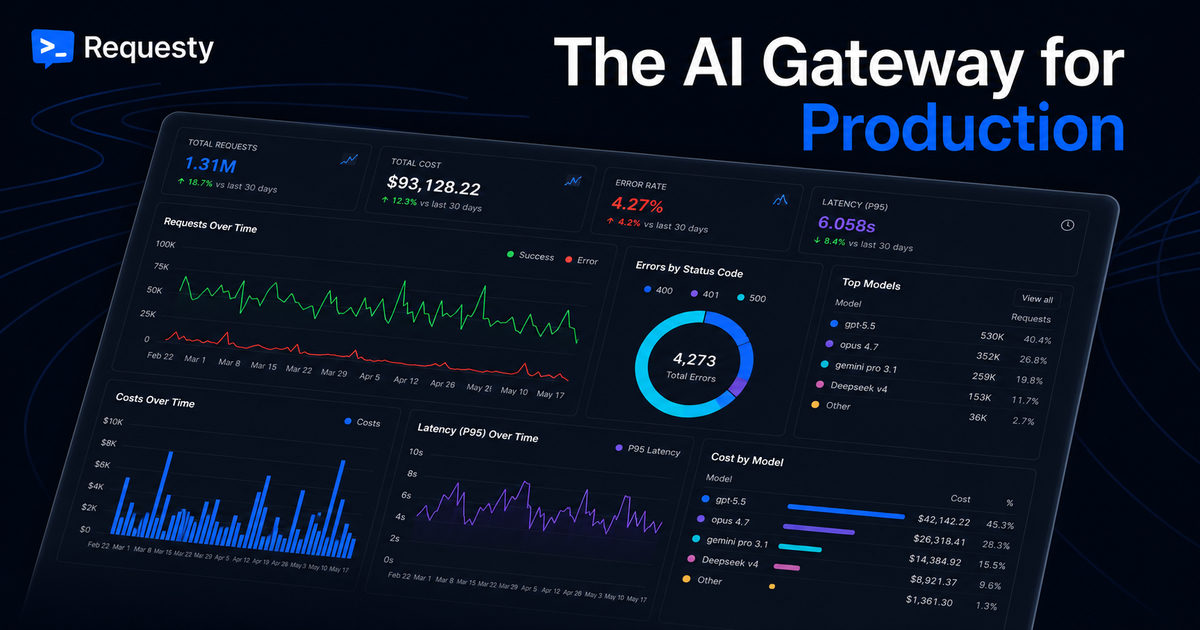 Requesty
 Pros
- Drop-in OpenAI SDK compatibility allows switching models or routing chains with a single configuration line
- Automated sub-14ms failover absorbs 429 rate limits and upstream outages without breaking user sessions
- Comprehensive routing options including live latency scoring, percentage-based load balancing, and agent-specific chains
- Real-time PII detection and redaction strips personal data before prompts reach upstream providers
Cons
- Proprietary SaaS platform with no option for self-hosted or fully air-gapped on-premise deployment
- Adds a proxy network overhead of roughly 12 to 40 ms to raw inference calls
- Free-tier endpoints have strict daily request caps and are subject to provider queue congestion