AI Tools for Thesis and Dissertation Writing
Directory data
- Tools in this collection
- 2
- With a free plan
- 1
Editor's picks
Based on editorial assessments, pricing and visitor votes
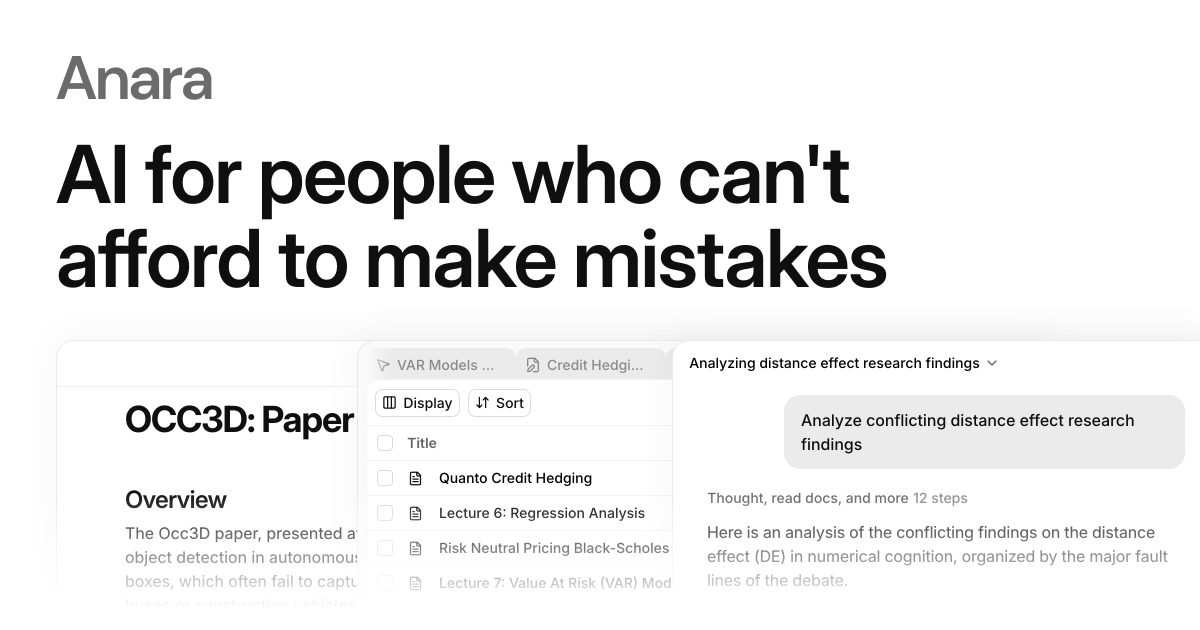
- Best overall Anara | AI you can trust Strong product
Anyone who has ever conducted an academic literature review knows the dread of an AI assistant confidently citing an authoritative journal, only for you to discover the paper does not exist.
- Good value Кэмп (ex. Кампус) Good product
Anyone who has sat over a research paper at three in the morning knows the feeling: the most frustrating part is rarely the subject matter itself, but the endless font rules, margin constraints, and the hunt for legitimate textbook citations.

Compare tools
| Tool | Model | Price from | Free plan | Assessment | Votes |
|---|---|---|---|---|---|
 Anara | AI you can trust Anara | AI you can trust | Trial | €11/month | Yes | Strong niche tool | ▲ 2 ▼ 0 |
 Кэмп (ex. Кампус) Кэмп (ex. Кампус) | Paid | RUB 399/month | No | Good specialized service | ▲ 2 ▼ 0 |
Frequently asked questions
Can I use AI tools to write my thesis for me?
AI tools are designed to assist with research, drafting, and editing rather than replacing the author. While they can summarize papers, generate outlines, and polish syntax, you remain responsible for the original analysis, critical judgment, and academic integrity. Always verify your institution's specific policies on AI assistance before using these services.
Are there free AI tools available for thesis writing?
Most academic AI platforms offer free tiers or trial periods with essential features like basic search, summarization, and grammar checking. Advanced capabilities, such as unlimited PDF uploads, deep semantic analysis, or automated citation exports, usually require a paid subscription. You can comfortably handle foundational research and proofreading using free plans alone.
How do AI tools help with literature reviews and citations?
Specialized tools parse academic databases to identify relevant papers, map citation networks, and summarize key findings across multiple sources. They can automatically format bibliographies in standard styles and locate direct supporting evidence for your arguments. This drastically reduces the time required to survey existing literature and organize references.
How do I choose the right AI tool for academic research?
Identify your primary bottleneck, whether that is discovering literature, structuring arguments, or editing prose for scholarly clarity. Look for software that indexes peer-reviewed sources with direct citations rather than generic chatbots that may fabricate references. Testing options on a single chapter or research question will quickly reveal which interface matches your workflow.
Other collections
About this collection
Writing a thesis or dissertation is an intense marathon of literature reviews, complex arguments, and painstaking citations. Modern academic AI platforms help you navigate dense scientific literature, synthesize complex studies, and organize chapters, allowing you to focus on deep analytical thinking rather than tedious formatting.
These platforms assist across every stage of the scholarly process, from uncovering relevant papers and summarizing methodology to refining academic tone and clarity. By integrating specialized research software into your workflow, you can accelerate the entire research cycle while maintaining complete intellectual rigor and academic integrity.