Make delivers high-leverage efficiency for automation engineers, operations leads, and product teams building complex data workflows without full-stack code.
Automates multi-step AI pipelines: Ingest customer emails or webhooks, classify intent via Anthropic Claude, synthesize answers with OpenAI, and log records to CRM platforms.
Eliminates boilerplate backend dev: Replaces microservices with visual scenarios that natively handle data mapping, retries, and format conversions.
Scales operational syncs: Keeps ERP, CRM, and cloud storage synchronized through event-driven webhooks and scheduled batch runs.
Pros
Granular visual flow control with native iterators, aggregators, and parallel routers
Deep AI catalog with native modules for OpenAI, Anthropic Claude, Google Gemini, and custom REST endpoints
Cons
Steep learning curve requiring a clear grasp of JSON schemas, arrays, and API logic
VseLLM removes the legal, financial, and network hurdles of connecting to global AI infrastructure. Its primary value is felt by teams that need stable access without cross-border billing headaches:
Developers and AI engineers: Point existing scripts, LangChain agents, or coding environments to a single endpoint without refactoring request schemas or handling individual vendor SDKs.
B2B companies and enterprises: Deploy generative AI into production legally with standard corporate invoicing, closing acts, and zero-log compliance required by internal security audits.
High-availability services: Safeguard production pipelines against unexpected vendor outages through automated auto-fallback channels.
Pros
Fully OpenAI-compatible endpoint that works out-of-the-box with standard SDKs, coding IDEs, and workflow tools
Unified access to text, embedding, speech-to-text, and image generation models under one balance
Cons
API key generation remains locked until an initial account deposit is made, with a 1,000 ₽ minimum card threshold
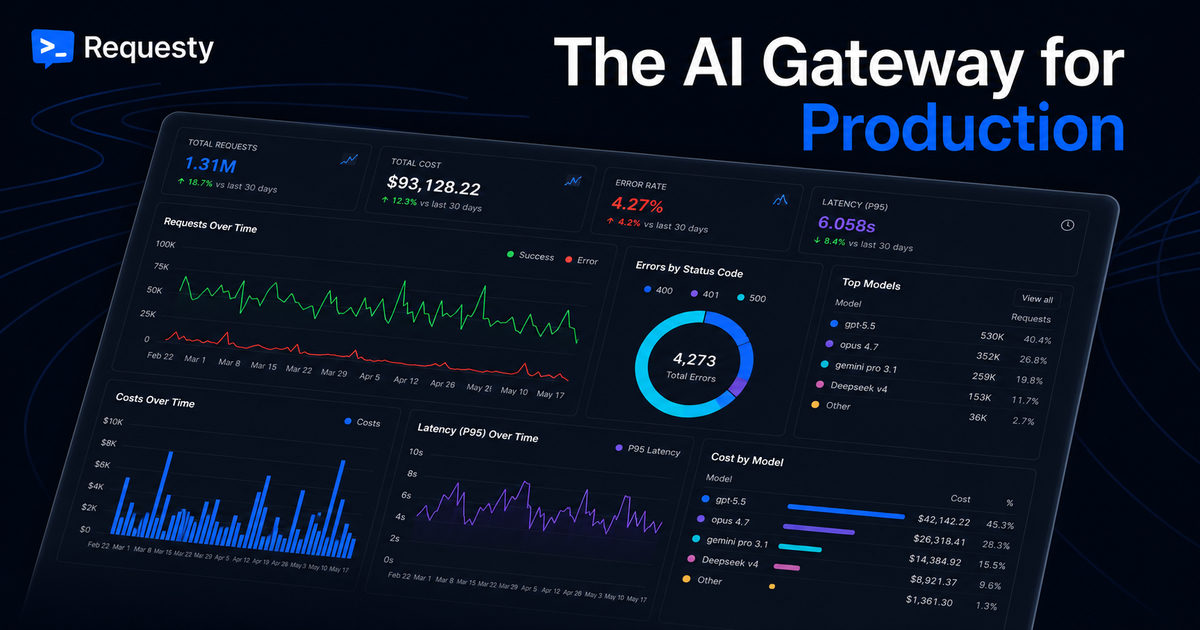
Requesty helps engineering teams build resilient, production-ready AI workflows without getting derailed by provider outages, unexpected bill spikes, or data compliance hurdles.
Platform and backend engineers gain automated failovers, zero-downtime provider switching, and unified latency monitoring across all providers.
Regulated organizations in LegalTech, FinTech, and healthcare can guarantee strict European data residency, sign standard DPAs, and redact sensitive PII automatically.
Autonomous agent builders can enforce strict per-agent spending caps, route requests to role-appropriate models, and debug tool calls without wrangling multiple SDKs.
Pros
Drop-in OpenAI SDK compatibility allows switching models or routing chains with a single configuration line
Automated sub-14ms failover absorbs 429 rate limits and upstream outages without breaking user sessions
Cons
Proprietary SaaS platform with no option for self-hosted or fully air-gapped on-premise deployment