 Consistent Character AI VS
  Figr
Figr
In short
- Only Figr offers free access.
Categories AI image tools, AI design and graphics tools AI design and graphics tools
Pricing and payment
Pricing model Trial Trial
Starting price Depends on the plan Free
Free access Trial access Yes
Pricing plans - Free — Trial access
- Starter Pack — $9.99 one-time
- Pro Pack — $34.90 one-time
- Max Pack — $89.90 one-time
- Basic — $8.25/month
- Pro — $19.90/month
- Max — $49.90/month
- Pro (Monthly) — $29.90/month
- Max (Monthly) — $79.90/month
- Free — Free
- Starter — $39 / 100 credits
- Max — $149 / 1,000 credits
- Enterprise — Contact for pricing
Regional payment options Pay directly on the website Pay directly on the website
Pricing last changed —
Ratings and reviews
Editorial assessment Good specialized service Good specialized service
Functionality Good Good
Price and value Good Average
Ease of use Good Good
Reliability and support Good Good
Innovation Average Good
User rating +1 +1
Data freshness
Service status Online, checked Online, checked
Last full review of the listing
Checked
Values come from catalog data: collected pricing, editorial assessments, reviews and the verification history. How we assess tools
 Consistent Character AI
 Good specialized service +1 Pros
- Reliable character identity preservation from a single photo reference without complex setup.
- Dedicated workflows for illustrated storybooks, pose sheets, and character turnarounds.
- Flexible purchasing options including one-time credit packs with 12-month validity alongside subscriptions.
- Automatic credit refunds for system errors and tasks blocked by safety filters.
Cons
- Dramatic camera angle shifts, like extreme profile views, can still trigger subtle identity drift.
- Scenes with three or more characters risk visual bleeding and require careful multi-slot prompt separation.
- Standard output is limited to 1K resolution, with 2K and 4K upscaling reserved for Pro tiers.
 Figr
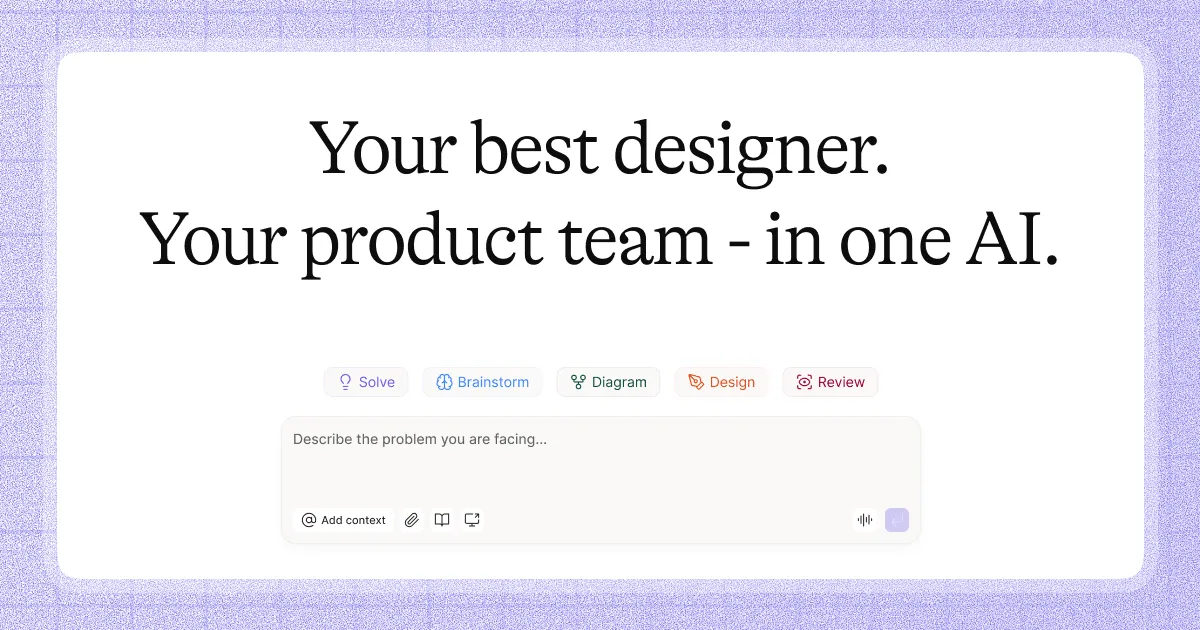
Figr Good specialized service +1 Pros
- Captures real product context directly from live web apps, Figma files, and code repositories
- Systematically maps edge cases including empty states, permission barriers, and network error recovery
- Translates raw PRDs and requirements into structured UX flow boards with transition logic
- Exports clean, editable frames with auto-layouts and native component tokens directly to Figma
Cons
- Significantly less effective for greenfield ideas that lack existing product context or design systems
- Consumption of credits during deep flow generation and workspace indexing demands active monitoring
- Heavily customized or non-standard component libraries can require manual guidance to prevent preview styling quirks