AI Video Editing Tools
Directory data
- Tools in this collection
- 8
- With a free plan
- 2
- Median price
- $12.45/month across 4 services
- Median price
- €15/month across 3 services
Which to choose
Based on how complete the verified information is, pricing and visitor votes
- Most complete profile OpusClip
- With a free plan Visla
- Price at or below the median Higgsfield




Compare tools
| Tool | Model | Price from | Free plan | Votes |
|---|---|---|---|---|
 OpusClip OpusClip | Freemium | €15/month | Yes | ▲ 2 ▼ 0 |
 Visla Visla | Freemium | $22/month | Yes | ▲ 1 ▼ 0 |
 Higgsfield Higgsfield | Free trial | $9/month | No | ▲ 1 ▼ 0 |
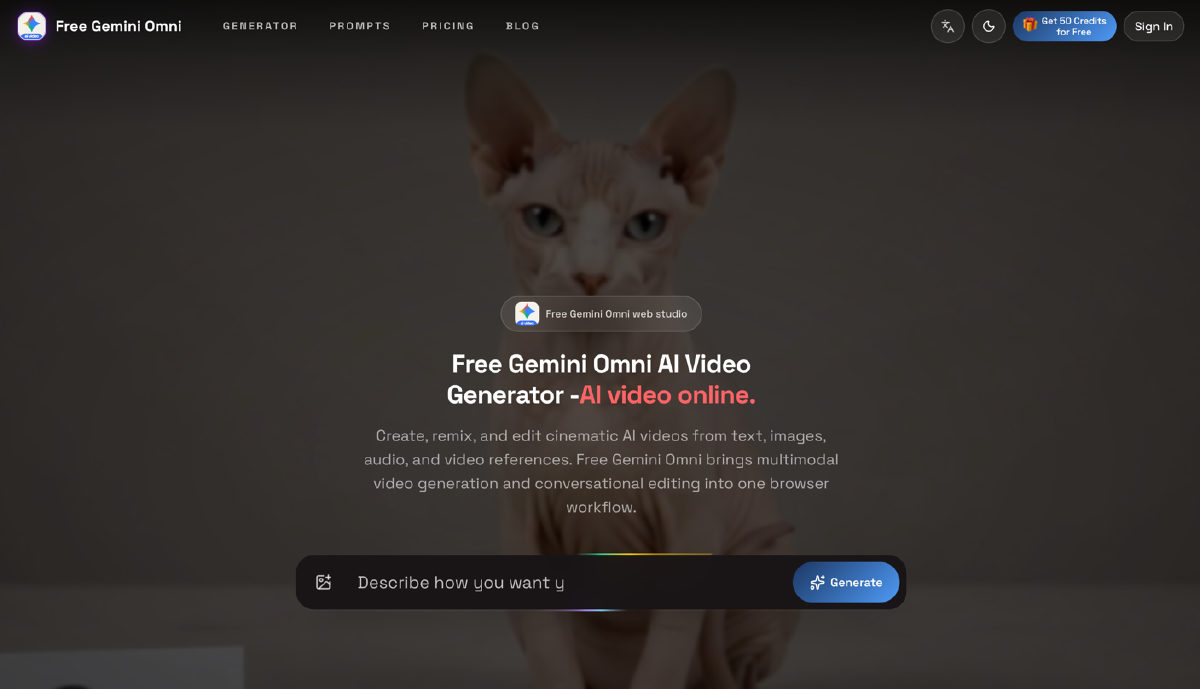
 Free Gemini Omni Free Gemini Omni | Free trial | $9.90/month | No | ▲ 0 ▼ 0 |
 Magiclight AI Magiclight AI | Free trial | $15/month | No | ▲ 2 ▼ 0 |
 VEED VEED | Free trial | €22/month | No | ▲ 1 ▼ 0 |
 Givon AI Givon AI | Free trial | RUB 990/month | No | ▲ 1 ▼ 0 |
 Pollo AI Pollo AI | Paid | €13/month | No | ▲ 1 ▼ 0 |
Frequently asked questions
What tasks can AI video editing tools automate?
These tools automate mechanical post-production tasks such as silence detection, rough-cut generation, subtitle synchronization, and aspect-ratio reformatting. Many platforms analyze long-form video to locate engaging highlights and export them as vertical clips for social media. Advanced models can also clean up background noise, adjust eye contact, and insert context-relevant B-roll footage automatically.
Are AI video editing tools free to use?
Most platforms offer free tiers or trial credits that allow users to test transcription, basic clipping, and visual templates. However, free tiers usually apply resolution limits, watermark output files, or restrict processing minutes per month. Professional production and faster cloud rendering generally require a paid monthly or annual plan.
How do I choose the best AI video editing tool for my needs?
Determine your primary workflow bottleneck before selecting a platform. If you need to repurpose long podcasts or webinars into social content, look for specialized auto-clipping and reframing engines. For narrative and polished commercial work, choose software that integrates timeline control, text-based editing, and export support for traditional editing suites.
Can AI video editors completely replace human editors?
Current AI tools excel at accelerating predictable editorial routines, but they cannot replace nuanced human storytelling, contextual humor, or creative vision. They perform best as collaborative assistants that assemble rough cuts and clean raw footage in minutes. The final pacing decisions, emotional tone, and narrative polish still require human oversight.
Other collections
About this collection
Video editing fundamentally consists of analyzing raw visual and audio streams, identifying key moments, and applying targeted cuts or enhancements. Traditional timeline management requires hours of manual scrubbing, silence trimming, and tedious asset alignment. AI video editors automate these repetitive technical decisions, converting hours of mechanical assembly into structured, text-guided workflows.
Modern neural networks parse transcripts, detect visual scene shifts, balance audio levels, and dynamically generate contextual captions or B-roll. By offloading repetitive cutting and repurposing routines to intelligent algorithms, creators can focus entirely on high-level narrative structure and creative vision.