 Free trial
Luma Dream Machine
Quick facts
- Pricing model
- Free trial
- Minimum price
- from $30/month
- Free access
- Trial access
- Platforms & integrations
- Web
- MCP Server
- Connectors
- Payment methods
- Visa
- Mastercard
- Bank card
- Google Pay
- Interface languages
- English
- Service status
- Online, checked


Developer and reliability
Information about the developer and the service's terms. This is a factual reference, not a quality assessment or a guarantee of safety.
- Developer
- Luma AI, Inc.
- Legal entity
- Luma AI, Inc.
- Legal entity's country
- United States
- Service launch
- June 12, 2024
- Domain registered
- June 19, 2021
- The domain registration date is not the service's launch date.
Compare with alternatives
Choose a pair to compare features, pricing and payment methods.
About the tool
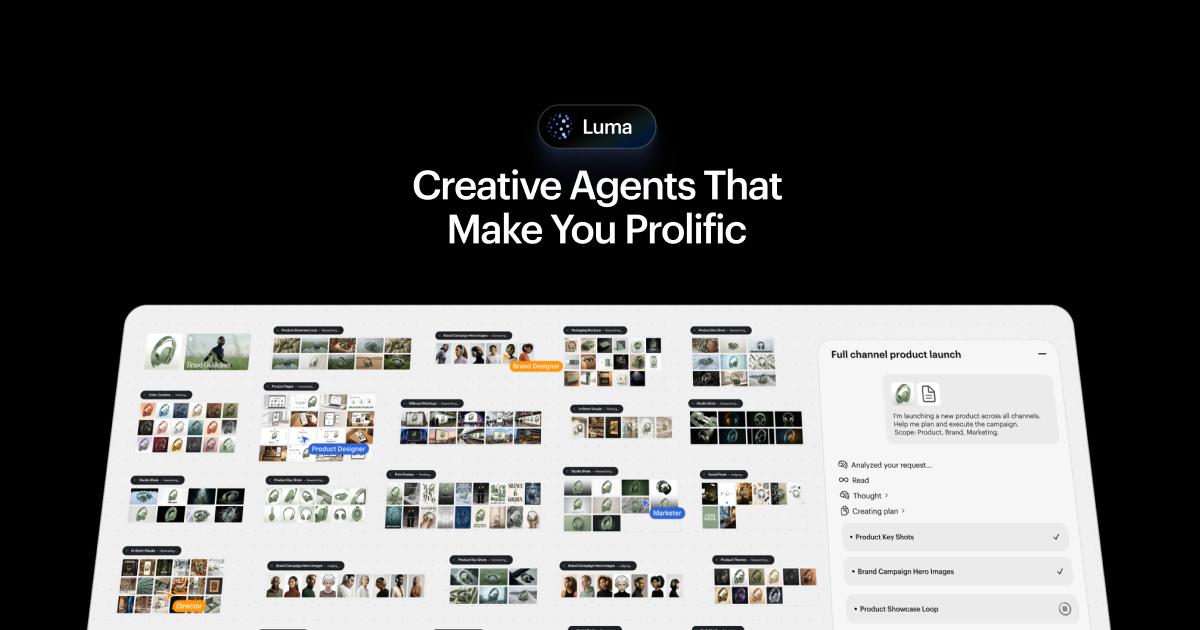
Running separate subscriptions for prompt-based video, still image generation, and sound design is an operational headache. Luma Dream Machine, built by US-based Luma AI, Inc. (launched in June 2024), addresses this friction by turning generative media into an agentic creative workspace centered on an infinite canvas.
Rather than forcing you to guess how a single model will interpret a prompt, Luma acts as a multimodal command center. It deploys its proprietary reasoning-first architectures—Ray for video and UNI for image generation—alongside top-tier third-party engines. Much like multi-model creative platforms such as Higgsfield and Van Gogh Studio, the platform eliminates vendor lock-in by letting you compare and orchestrate video generators like Veo, Kling, Seedance, and MiniMax, static image synthesis via FLUX, GPT Image, Seedream, and Nano Banana, and audio design powered by ElevenLabs and Whisper right on the same board.
Key capabilities across the platform include:
- Directed video generation: Text-to-video, image-to-video, and video-to-video generation with multi-keyframe control (setting up to 16 keyframes inside a clip to dictate transitions and camera action beat by beat).
- Dual agent modes: Brainstorm Mode lets you explore campaign strategies, visual concepts, and mood boards without burning media credits, while Create Mode deploys autonomous agents to select the right models, render assets, and iterate.
- Master Reference Assets: Anchor characters, product packaging, and logos to preserve identity, styling, and visual continuity across different aspect ratios and video generations.
- Studio-grade export: Native 1080p rendering, HDR pipelines, and 16-bit EXR file export designed for seamless compositing in tools like DaVinci Resolve and Foundry Nuke.
- Full editing toolkit: In-canvas background removal, aspect ratio reframing, layers-based image editing, motion extension, automated dubbing, and lip syncing.
Under the hood, access runs via a web interface, MCP server, and Connectors, backed by a developer-ready REST API with official Python, JavaScript, and TypeScript SDKs. While the platform offers unmatched flexibility for creative directors and agencies, credit management requires caution: high-resolution renders, HDR processing, and complex video-to-video tasks consume monthly credits rapidly, and strict contractual guarantees against training on user data are limited to custom Enterprise tiers.
Luma Dream Machine Reviews
No reviews collected yet
We are collecting user reviews of this tool from public sources. They will appear here soon.
Luma Dream Machine Pricing & Plans
Plus
Pro
Ultra
Enterprise
Free trial
Prices are based on the provider's information and may change.
Looking for a free option? Try these alternatives to Luma Dream Machine:


Luma Dream Machine Feature Comparison
Compare key features, prices and capabilities with similar tools
| Feature |  Current tool |  |  |  |
|---|---|---|---|---|
| Pricing model | Free trial | Free trial | Free trial | Free trial |
| Minimum price | from $30/month | from $15/month | from $9.90/month | from $15/month |
| Free access | Trial access | Trial access | Trial access | Trial access |
| User rating | ||||
| Current tool |
Frequently Asked Questions about Luma Dream Machine
Is Luma Dream Machine free to use?
The platform operates on a trial pricing model. New accounts receive starter trial credits to test features, but there is no perpetual free plan. Continued production requires subscribing to paid individual tiers—Plus ($30/month for 10,000 credits), Pro ($90/month for 40,000 credits), or Ultra ($300/month for 150,000 credits)—or negotiating a custom Enterprise agreement.
Which generative models can I run inside Luma?
Luma provides both proprietary models and leading external engines. For video, you can utilize Luma's Ray alongside Veo, Kling, Seedance, and MiniMax. For graphics and image generation, it hosts Luma's UNI, FLUX, GPT Image, Seedream, and Nano Banana. Audio generation, sound effects, and transcription are powered by ElevenLabs and Whisper.
Does Luma use uploaded project assets to train its AI models?
A contractual no-training guarantee is exclusively provided to Enterprise customers and dedicated Scale API users. For standard individual tiers (Plus, Pro, and Ultra), data handling is governed by standard service terms, meaning complete model exclusion is not contractually guaranteed on consumer plans.
What payment methods and platforms are supported?
Payments can be made using Visa, Mastercard, standard bank cards, and Google Pay. The service interface is available in English across the web app, MCP server, and dedicated Connectors, with API access available via Python, JavaScript, and TypeScript SDKs.
How can I pay for Luma Dream Machine?
Luma Dream Machine payment methods: Visa, Mastercard, bank card, and Google Pay.
What languages is the Luma Dream Machine interface available in?
The Luma Dream Machine interface is available in: English.
What platforms is Luma Dream Machine available on?
Luma Dream Machine is available on: Web, MCP Server, and Connectors.
Similar tools
 FilmSpark ▲ 1 ▼ 0
Organizes AI video creation into an end-to-end filmmaking pipeline, helping creators script, storyboard, generate, and edit projects in one place. It maintains character and visual consistency across cuts while supporting shot-by-shot model selection and built-in timeline editing.
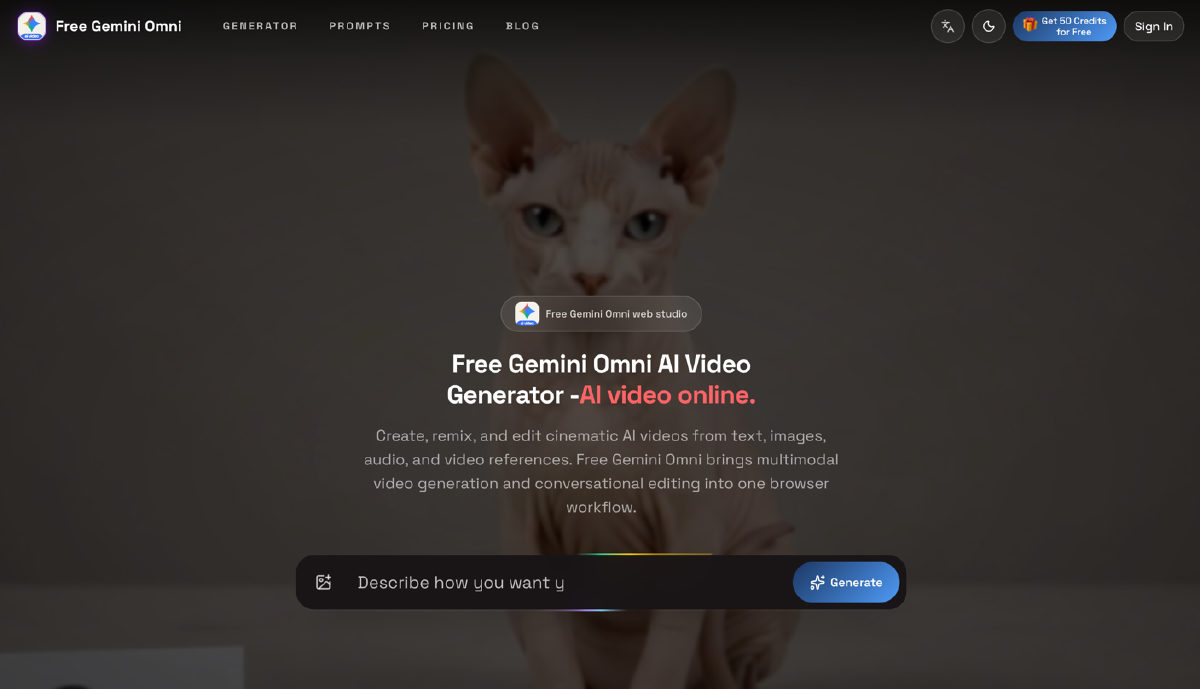 Free Gemini Omni ▲ 1 ▼ 0
Consolidates multiple external AI video and image models into a single workspace for multimodal media synthesis and conversational editing. Users can generate, remix, and extend clips using text, image, audio, or video references through a web studio or unified REST API.
 Magiclight AI ▲ 2 ▼ 0
Converts text prompts, scripts, and still images into multi-scene narrative videos up to 50 minutes long. The platform combines character consistency tools, voice synthesis, automated lip-syncing, and timeline editing into a single workflow.

 CoreMind ▲ 2 ▼ 0
Consolidates generative models for images, video, voice, and music into a single browser-based studio for multimedia content creation. It helps solo creators and marketing teams produce commercial assets, motion clips, and audio tracks under a unified account.
 Higgsfield ▲ 1 ▼ 0
Combines multiple AI video and image engines into a creative studio with controls for camera directing, subject consistency, and post-production. It helps creators produce cinematic video, generate commercial ads from product URLs, and connect workflows directly to tools like Adobe After Effects and Blender.
 LLaDA-Image ▲ 1 ▼ 0
Generate and edit visuals right in your browser without burning through local hardware. Powered by a unified diffusion framework, it handles both text-to-image prompts and natural-language photo tweaks while keeping subject identity intact.